About Seedrs
Seedrs is an equity crowdfunding company, intending to democratise early-stage investing for everyone.
In simple terms, giving everyone (not just the folk that know or are in the right circles), the potential to make a bit of cash from giving small companies some money.
Seedrs was acquired by US firm Republic in 2022 for $100m.
Summary
Founders (the people who own the company, who are raising money), have a registration phase where they can understand who might be interested in investing into their company.
To better help a founders funding round, there was the chance to increase engagement between the founder and potential investors, with the aim of converting potential investors into invested investors.
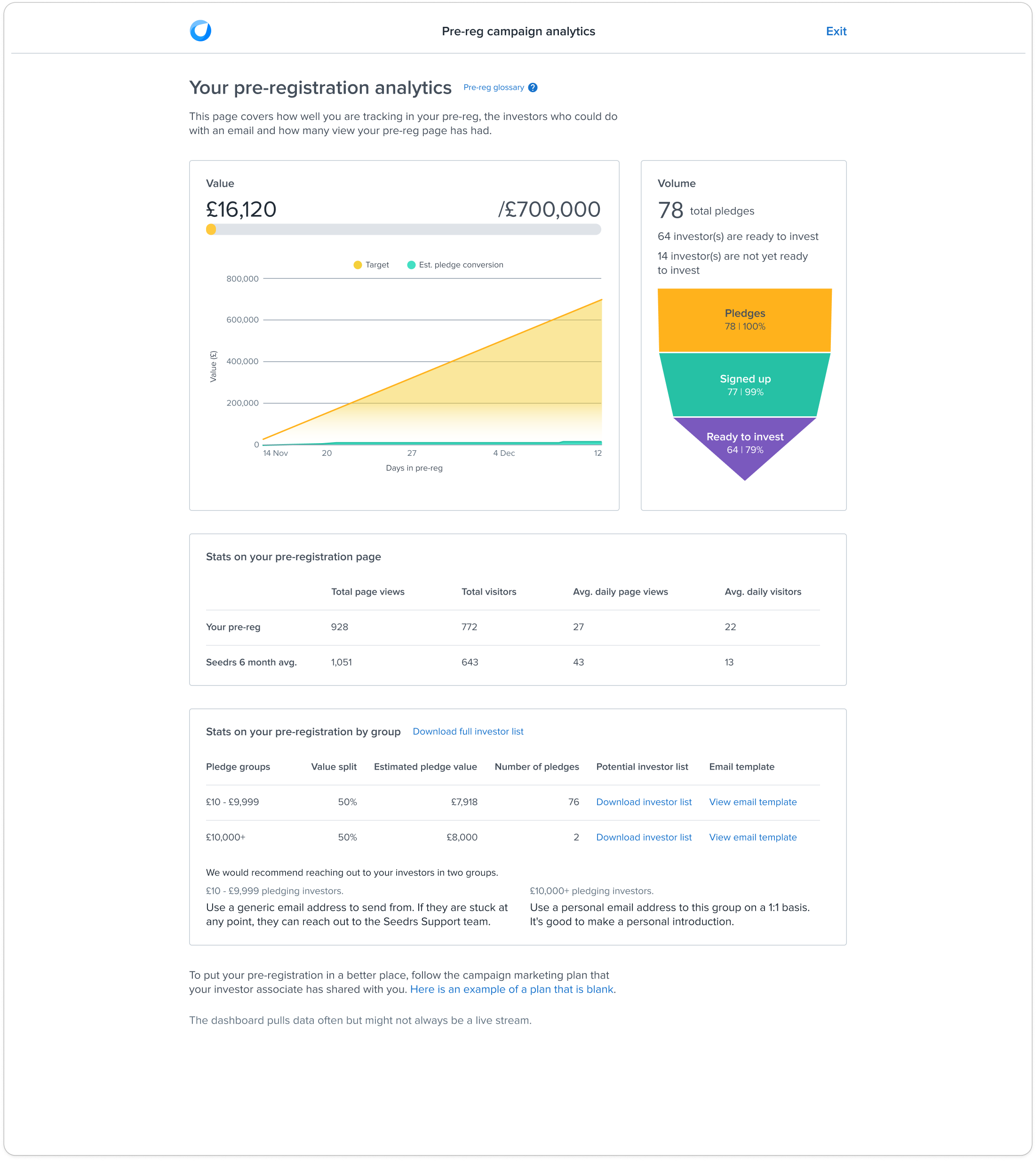
A dashboard was developed and deployed which saw great traction. Investor information was downloaded on average three times a day, with an average of five page views a day by the founders. There was also increased efficiency between the Seedrs staff members and the founders.
🤔 The problem
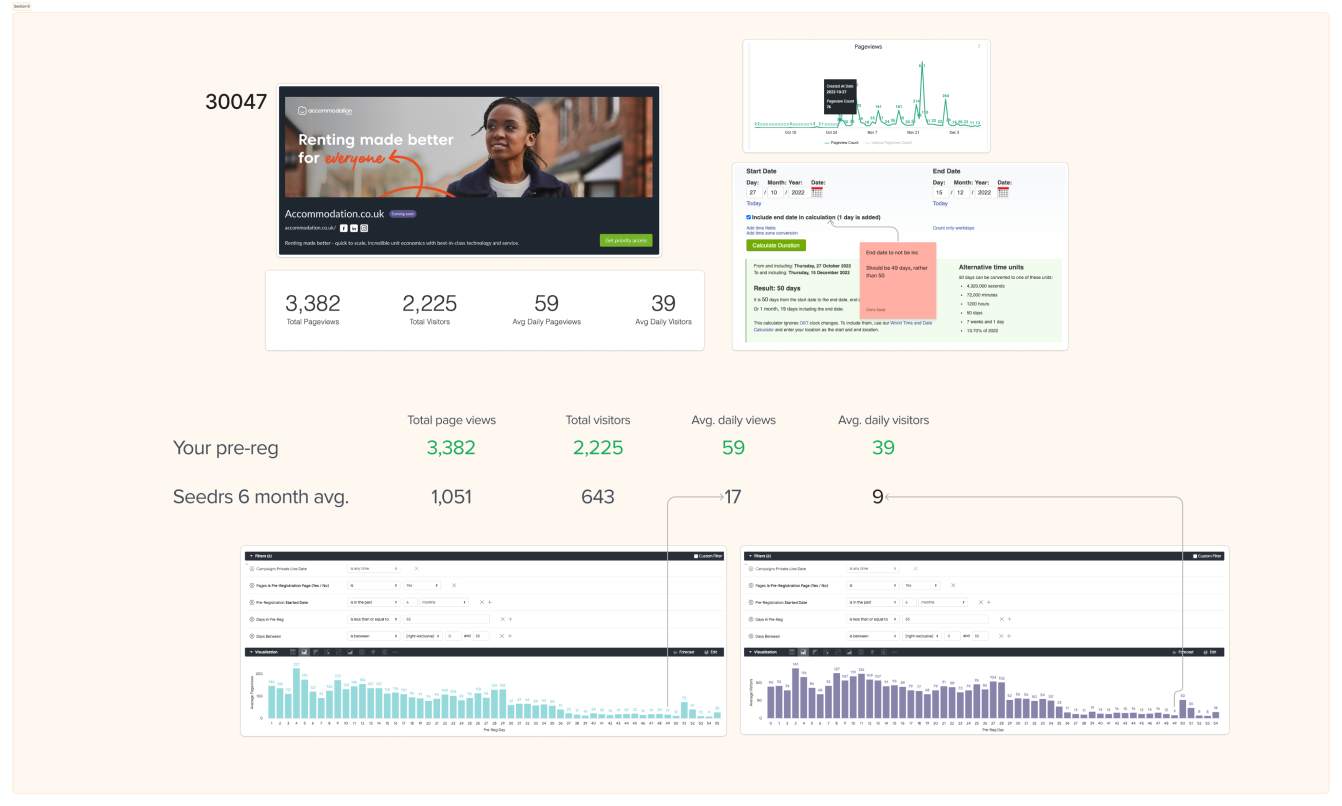
Founders didn’t understand the opportunity they had or what to do with the information that was available to them. An experiment provided that a founder reaching out to potential investors saw greater engagement with the founder and the fundraising round.
Founders also weren’t aware of how much of the potential investment would actually convert into real investment, as well as how this would impact their overall funding round.
Seedrs staff members were having to tell and show founders to reach out to these potential investors, as well as providing screenshots of internal dashboards that founders requested information about.
🥅 The goals
-
- Increase founder outreach to potential investors. In turn, increase the amount of investment into a campaign.
- Increase founder marketing in the registration phase. Which would increase the attention to the founders’ campaign.
- Decrease questions to staff members, from founders, about the views on their pre-reg page. Meaning staff could work with the founders on other areas of their campaign.
- Increase founder outreach to potential investors. In turn, increase the amount of investment into a campaign.
🎛 My role
As the sole designer working on this part of the business I did the following:
-
- Understood the founders’ confusion and wants about this registration phase of the journey.
- Heard from staff members what the founders’ typical requests are about the registration phase.
- Tested with both founders and staff members to understand if the dashboard was meeting their expectations and needs.
- Communication and collaboration with the PM and engineering manager, sharing thinking and progress.
🎨 The process
Understand the problem
Taking the time to talk with the founders to hear their perspectives and hearing why they weren’t reaching out to potential investors was insightful. It basically came down to:
-
- ‘I don’t know who I should be reaching out to’.
- ‘I don’t know what I should be saying to them’.
I sat in on calls between staff members and founders which created more insights. As well as chatting with a group of staff about what common requests are from founders at this stage.
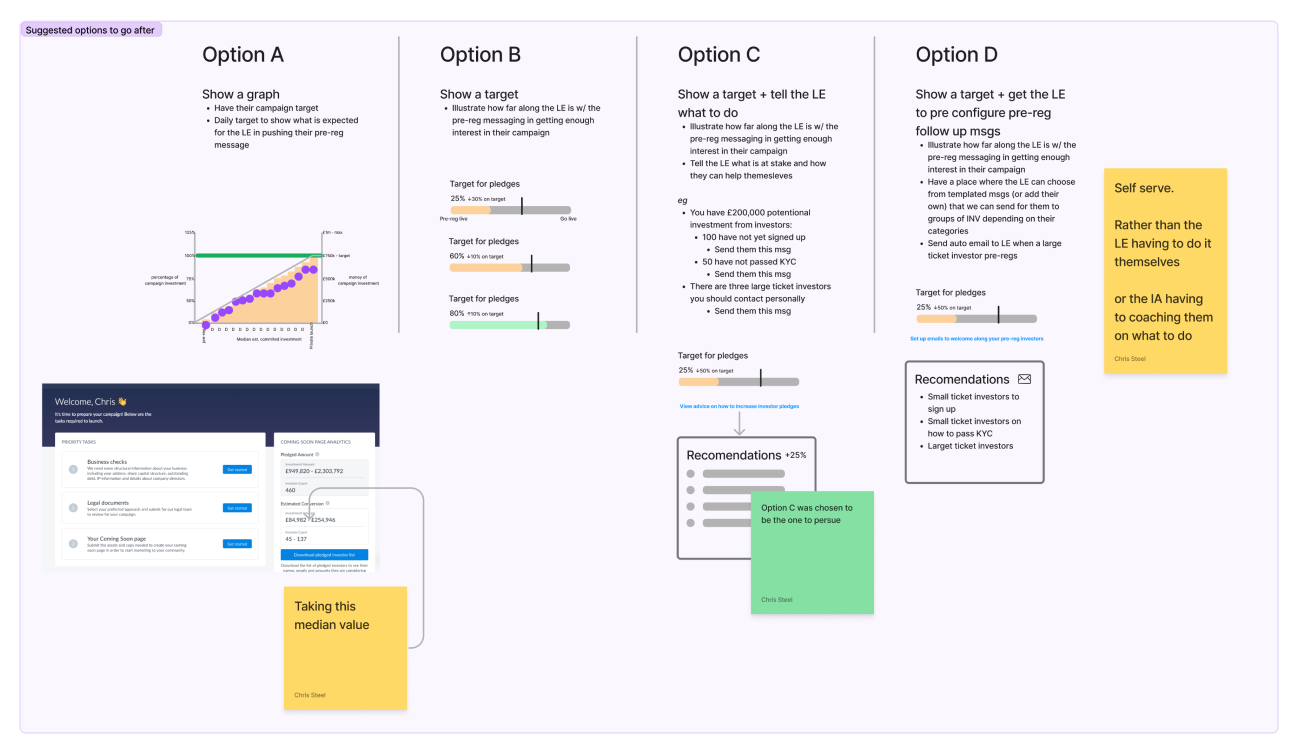
With these findings I took the chance to come up with four options in which we could pursue, all with pros and cons of each, but mainly with a recommendation. I took this to the PM and engineering manager, shared the rationale and heard their thoughts on directions and how we could slice it up the idea to be a deliverable.
Once we were on the same page it was time to sketch and off to do some desk research and see what dashboards I could use for inspiration.
Design, test and deliver
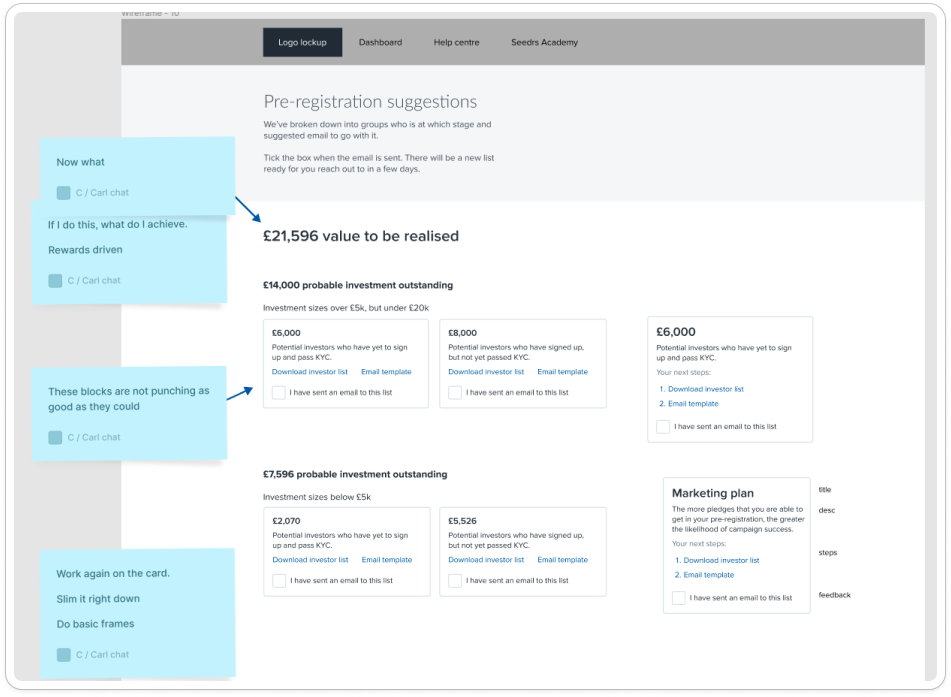
Lofi comps were mapped out, I talked with the data team to know how accurate the information we had was. Iterations happened as well as putting it them in front of the rest of the design team for their thoughts on the direction. Chats with the engineers around packages we had access to in the stack were helpful at this point.
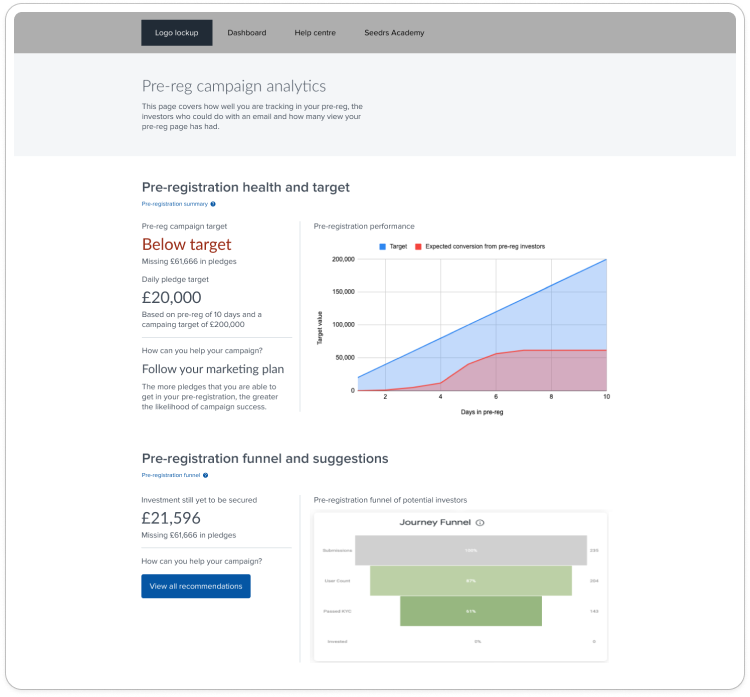
When hifi comps started to come around I got to testing with the founders. Quick calls highlighted more of what they cared about, the founders were taking the actions that I was testing for. Grabbing staff members to hear their thoughts was a great help too. Tweaks occurred from the testing.
Weekly check-ins with the PM and engineering manager, plus the design team throughout the process.
Once we were comfortable, I broke down the designs and commented around the frames to provide as much info for them to be able to create the tickets for the work.
A quick QA session before deploying to prod, also briefing the staff members that the dashboard was going live and to share any observations from founders as well.
🚀 Outcome
-
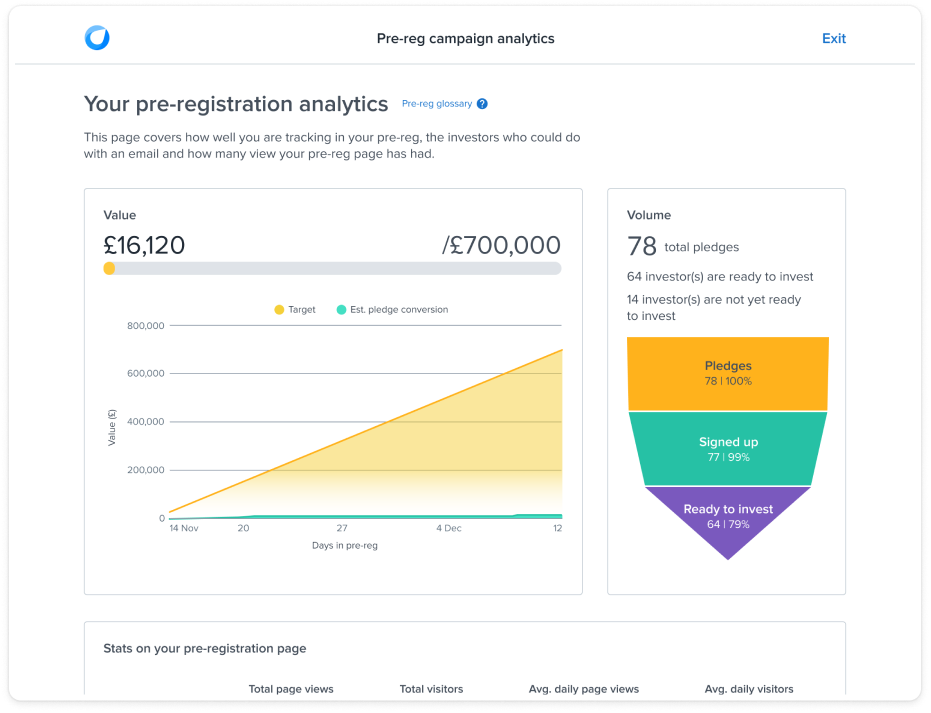
- Dashboard designed, developed and deployed in partnership with the engineering team.
- Investors’ details downloaded on average three times a day (186 downloads a month).
- Dashboard viewed an average of five times a day (1,500 views a month).
- Efficiencies gained for staff members due to less hand-holding of founders and sharing data.
- Increased outreach between founders and potential investors.
🧗 Challenges
A challenge that I faced during this initiative was there were no other dashboards around to have as base, this work was all greenfield, from layout to graphs to how to structure the page.
Always referring back to what the founder wanted and what information need to be shared kept the work grounded. Taking inspiration from different places rather than reinventing the wheel made the process run smoother.